

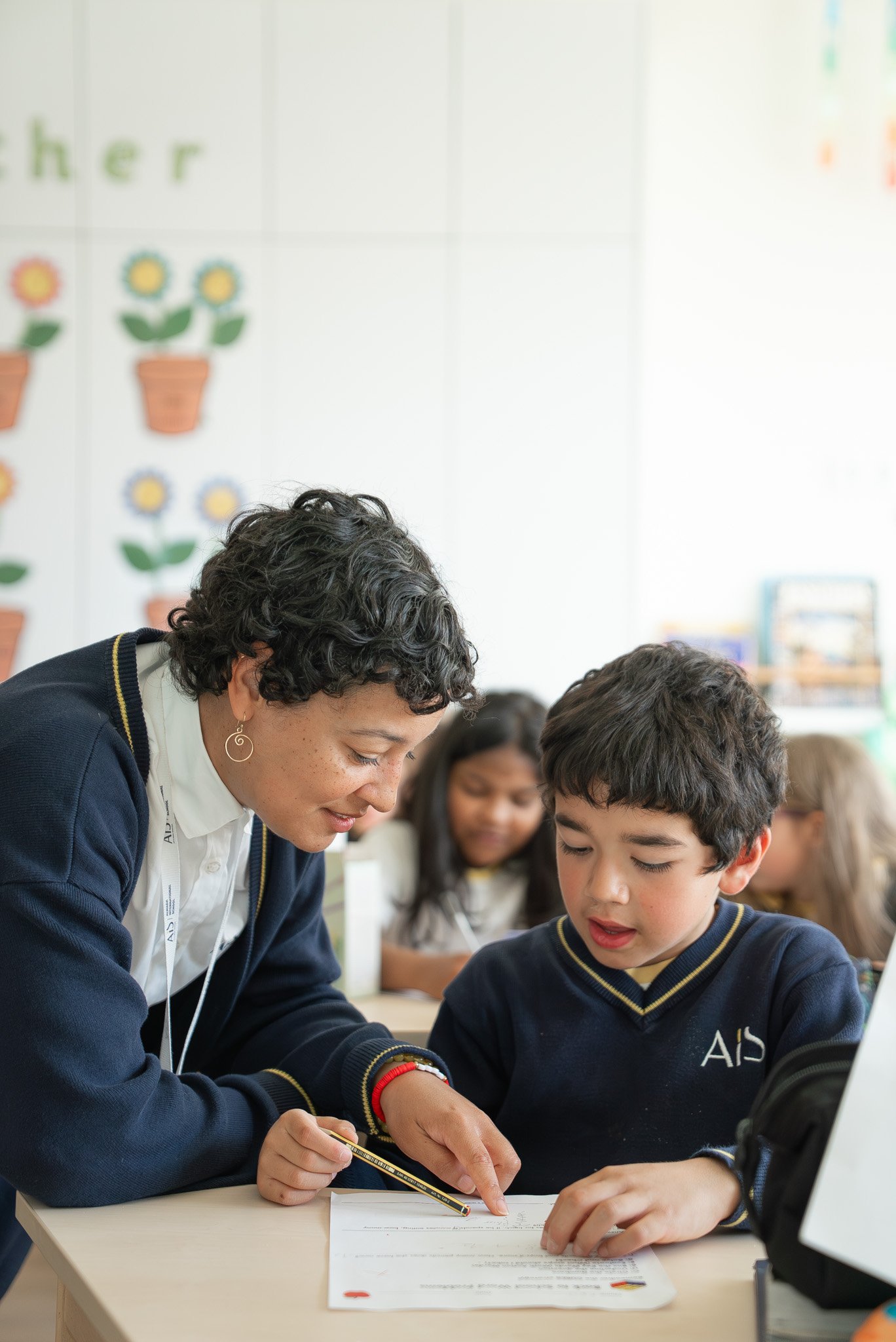
In the midst of busy family life, many decisions are made with the best of intentions: we help to be quicker, we anticipate to avoid frustration, we simplify so that everything goes smoothly. Yet it is worth pausing to consider whether, in trying to make things easier, we may sometimes be removing opportunities for growth.
All parents want their children to be confident, balanced and happy. Yet genuine confidence does not grow from constant comfort. It grows from repeated experiences of facing something difficult and realising, “I did it myself!”.
Once a child has established a secure foundation in their early years – shaped by consistent care, emotional security and predictable structure, the next significant developmental milestone begins: autonomy.
Gradually, children move from relying primarily on adults to wanting to act independently.
This is the stage when “I’ll do it” appears. What looks like stubbornness is, in fact, a sign of growing identity. It marks the beginning of a child’s understanding that they can act upon the world and influence what happens to them. It reflects a growing awareness: I can try. I can act. I can influence what happens.
This shift unfolds in everyday moments. Autonomy is built through action.
When a child attempts to fasten their shoes, organise their school bag, solve a maths problem or manage a disagreement, they are doing far more than completing a task. They are testing an internal belief: Am I capable of learning difficult things?
The answer to that question is shaped by experience.
Albert Bandura’s research on self-efficacy shows that the belief that effort influences outcomes is one of the strongest predictors of persistence and resilience. Crucially, this belief does not develop through encouragement alone; it develops when children repeatedly experience that their actions lead to progress. Each time a child attempts something challenging and makes progress, however small, they gather evidence that effort matters. Over time, these accumulated experiences of competence shape the conviction that “I can get better at this.
This is why the way adults respond during the process is so important. When we praise effort, strategy and persistence, rather than results alone, we reinforce the message that growth comes from practice. Saying, “I noticed how you kept trying different ways to solve that.” carries a different impact from simply saying, “Well done.” When mistakes are treated as part of learning rather than as failure, children are more willing to take risks, to try again and to remain engaged when things feel difficult.
Children who have built this sense of competence are less likely to give up, better able to tolerate frustration and more willing to sustain effort when tasks become challenging.
This growing sense of competence is also closely linked to anxiety. Research consistently indicates that children and adolescents who perceive greater internal control and autonomy show lower vulnerability to anxious symptoms. When children experience themselves as capable of acting and problem-solving, the world feels more manageable. Anxiety tends to grow when situations appear unpredictable and beyond one’s influence; it decreases when children feel they have tools to respond.
In this sense, autonomy is not simply a developmental milestone, it is a protective factor for emotional wellbeing.
It is also the ground in which a growth mindset takes root. Carol Dweck’s work demonstrates that children who understand ability as something that develops through effort respond to difficulty with greater persistence and reduced avoidance. The difference between “I can’t do this” and “I can’t do this yet” may appear subtle, but it fundamentally changes how the brain interprets challenge.
Promoting autonomy means allowing children to experience that “yet”.
It means accepting that it may take longer.
That the outcome may not be perfect.
That frustration may arise.
It also means resisting the understandable impulse to step in too quickly, especially when time is short or emotions are running high. In the short term, doing things for a child may save minutes. In the long term, it may reduce opportunities to build confidence.
At the same time, autonomy does not mean the absence of boundaries. Healthy independence develops within clear and predictable structure. Consistent rules and age-appropriate expectations provide the security children need to explore. Without structure, there is insecurity; without autonomy, there is dependency.
Ultimately, the question becomes this: do we want children who perform well when everything is easy, or children who remain steady when something is difficult?
Autonomy is training.
Training in effort.
Training in self-regulation.
Training in confidence.
It is in small, repeated daily actions, tidying, waiting, organising, trying again after a mistake that the capacity to face greater challenges is built. Resilience is rarely formed in extraordinary moments of success; it grows in the quiet repetition of ordinary attempts.
Because learning is not only about acquiring knowledge, it is about developing the courage and competence to face what is not yet known.
And it is through this daily practice of challenge within a secure and supportive environment that we help our children grow into individuals who are more confident, more autonomous and emotionally better prepared for the challenges they will encounter both inside and beyond school.
Practical Ways to Foster Autonomy at Home:
- Pause before stepping in
When your child says “I can’t”, resist answering immediately.
Try: “What could you try first?” - Use the word “yet” consistently
When your child says, “I can’t do this,” gently add, “You can’t do it yet.”
Model it yourself: “I’m learning how to do this yet.” - Praise the process, not just the result
Instead of “Well done!”, try:
“You kept going even when it was hard.”, “You worked really patiently.”, “You must be proud of yourself!” - Allow and accept small, safe mistakes
If they forget their PE kit once, let them experience it; If they spill a little while pouring water, guide them to wipe it up.
Natural consequences build responsibility. - Give age-appropriate responsibilities
Examples: Packing their school bag; Setting the table; Preparing a simple snack; Feed the dogs. - Present responsibilities as trust
“I know you’re ready for this.” - Offer limited choices
Instead of open-ended decisions, provide structure:
“Would you like to do homework before or after snack?”
“Which of these two outfits will you choose?”
Choice builds ownership.
- Break tasks into manageable steps
When something feels overwhelming, help them plan:
“What’s the first small step?”
Planning supports autonomy without removing challenge. - Model calm problem-solving
When something goes wrong, say aloud:
“That didn’t work. Let’s think of another way.”
Children internalise how you approach difficulty. - Encourage them to speak for themselves
At the doctor, in a shop, or with a teacher, prompt them gently:
“Would you like to explain?”
This builds confidence in social autonomy. - Keep boundaries clear and predictable
Autonomy grows within structure.
Consistent routines around sleep, homework and screen time provide the safety needed for independence.